Aspect
Materials Selection











Summary
Materials selection is a critical component of green port development and sustainable maritime infrastructure. Ports are long-lived, resource-intensive assets and operational activities exposed to harsh marine environments, so decisions about materials require a balance of durability, environmental impact, cost, and resilience. Five key considerations shape sustainable materials selection:
- whole-of-life analysis
- re-use
- low-carbon materials
- sourcing constraints
- transport logistics.
Traditional procurement often focuses on point-of-delivery impacts, primarily upfront cost and embodied carbon. However, green port design increasingly adopts a whole-of-life (WOL) analysis, which considers the environmental and economic impacts over the entire lifespan of an asset. Whole-of-life decision-making can combine environmental life-cycle assessment with life-cycle costing. ISO 14040 and ISO 14044 provide the environmental LCA framework (ISO, 2006a; ISO, 2006b); economic costs require a separately defined appraisal.
Material re-use, including material recycling is a cornerstone of circular economy principles in port sustainability. Re-using existing materials reduces demand for virgin resources, lowers embodied energy, and minimizes waste sent to landfill.
Reducing embodied carbon through low-carbon materials is central to achieving sustainability goals, including net-zero, for port infrastructure. This can be considered across two categories: (1) Traditional high-strength materials; and (2) emerging alternative materials.
Steel and concrete remain essential for heavy marine infrastructure due to their strength and durability. Efforts to decarbonize these materials include:
- Low-carbon or “green” steel produced using hydrogen or electric arc furnaces
- supplementary cementitious materials (SCMs) such as fly ash or slag to reduce clinker content in concrete
- carbon capture and storage (CCS) in cement production.
These innovations allow continued use of high-performance materials while lowering emissions.
Emerging alternative materials, including newer materials such as geopolymer concrete, recycled polymers, timber composites, or fiber-reinforced plastics may offer significantly lower embodied carbon. However, they often have lower structural capacity, limited long-term performance data, or uncertain behavior in marine environments. This creates a trade-off between innovation and reliability.
In practice, ports often adopt a hybrid approach, using low-carbon variants of traditional materials for primary structures and integrating alternative materials in non-critical applications where appropriate.
Environmental protection policies can significantly influence material selection present material sourcing constraints. In some island and coastal jurisdictions, the extraction of local aggregates such as coral sands and reef-derived rock is restricted or banned because of ecological damage, including habitat destruction and coastal instability (PIANC, 2008a; PIANC, 2026). The applicable rules must be checked for each jurisdiction. As a result, construction materials must often be imported, increasing costs and environmental impacts associated with extraction and transport. This constraint reinforces the importance of re-use, material efficiency, and innovative design to minimize material demand. It may also encourage the development of alternative local materials (e.g., manufactured aggregates or treated sediments), but these solutions often require investment in processing infrastructure and regulatory approval.
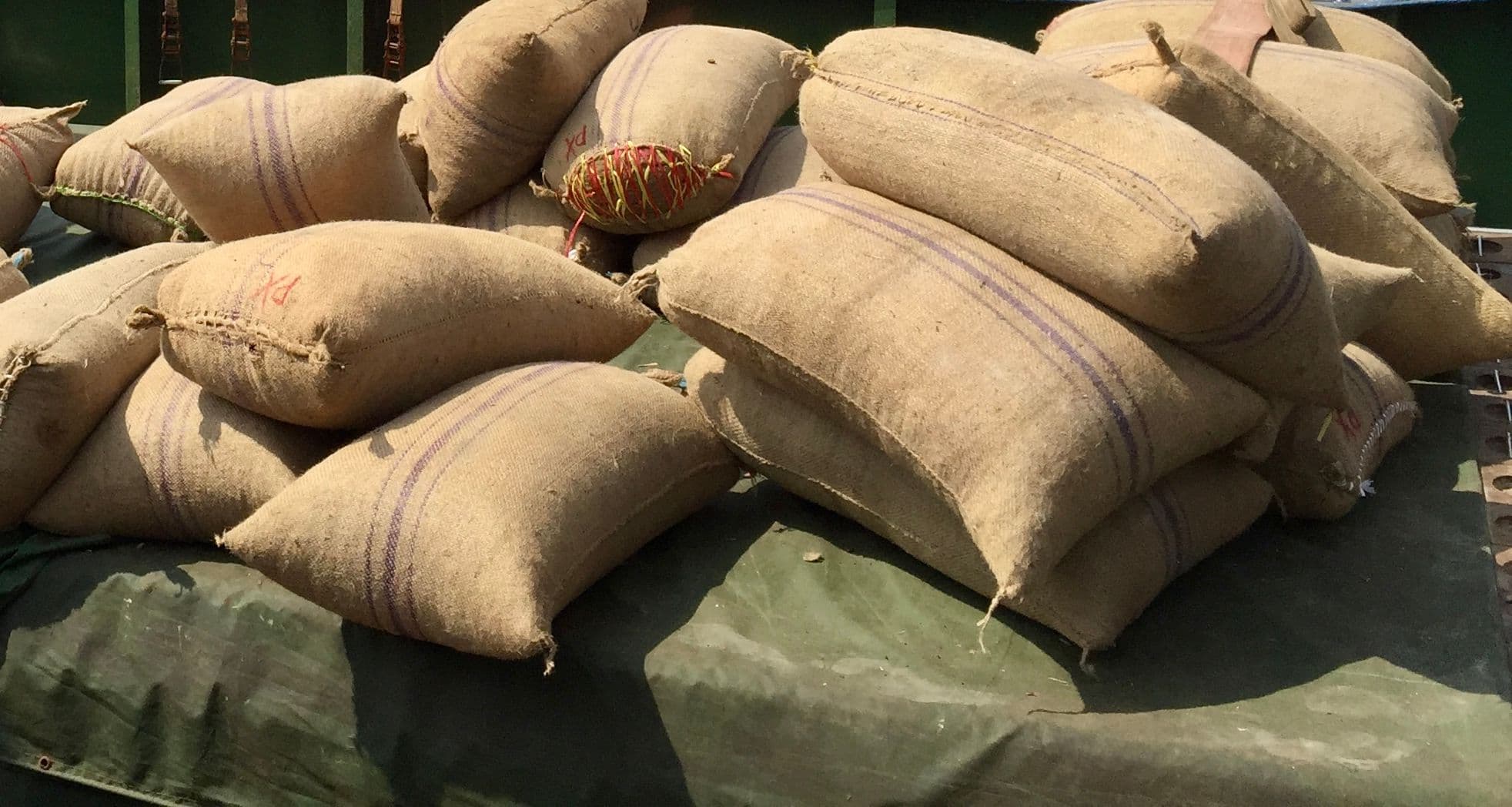
Port projects in remote or island contexts face significant logistical challenges (PIANC, 2026). The transport of construction materials, particularly heavy bulk materials like aggregates, steel, and cement, can dominate the carbon footprint and cost of a project. Long-distance shipping, limited supply chains, and infrastructure constraints can lead to delays and increased emissions. For some remote ports, importing materials may require multiple transport stages (e.g., international shipping followed by smaller vessels or barges), compounding logistical complexity.
To address this, sustainable material selection prioritizes:
- minimizing material volumes through efficient design
- using locally available or re-used materials where possible
- selecting materials with high strength-to-weight ratios to reduce transport loads
- coordinating logistics to optimize shipment efficiency.
Sustainable materials selection in DMC ports faces a combination of environmental, logistical, and technical challenges, alongside significant opportunities. The region’s fragile coastal ecosystems and increasing environmental regulations can restrict the extraction of traditional materials such as sand and coral, leading to reliance on imported resources, higher costs, and increased carbon emissions. At the same time, many countries have limited local supply of low-carbon materials like green steel and blended cement, while complex geography, particularly in archipelagic nations, makes transport and logistics costly and emissions-intensive. Harsh marine conditions, including high salinity, humidity, and extreme weather, further demand durable materials, often constraining the use of newer, less-proven low-carbon alternatives.
However, the region also presents strong opportunities. High sedimentation rates and ongoing port expansion generate large volumes of dredged material, which can be reused for reclamation and construction, supporting circular economy approaches. Rapid infrastructure growth allows countries to embed whole-of-life design principles from the outset, while expanding industrial capacity offers potential for local low-carbon material production. Combined with increasing access to green finance and ESG-driven investment, DMCs have opportunities to adopt innovative, hybrid material solutions.
Sustainable materials selection in green ports requires a holistic and context-specific approach. By prioritizing whole-of-life performance, integrating re-use strategies, adopting low-carbon materials, navigating sourcing constraints, ports can significantly reduce their environmental footprint while maintaining operational resilience. As sustainability expectations rise, these considerations are becoming central to modern port engineering and infrastructure planning.
Despite progress in hubs like Singapore, circular dredged material reuse, engineering with nature and lifecycle-based procurement appear more established in parts of Europe and North America than in many DMC ports. Policy alignment, financing mechanisms, and technical capacity building can help DMCs scale adoption.