Aspect
Workforce Standards and Engagement
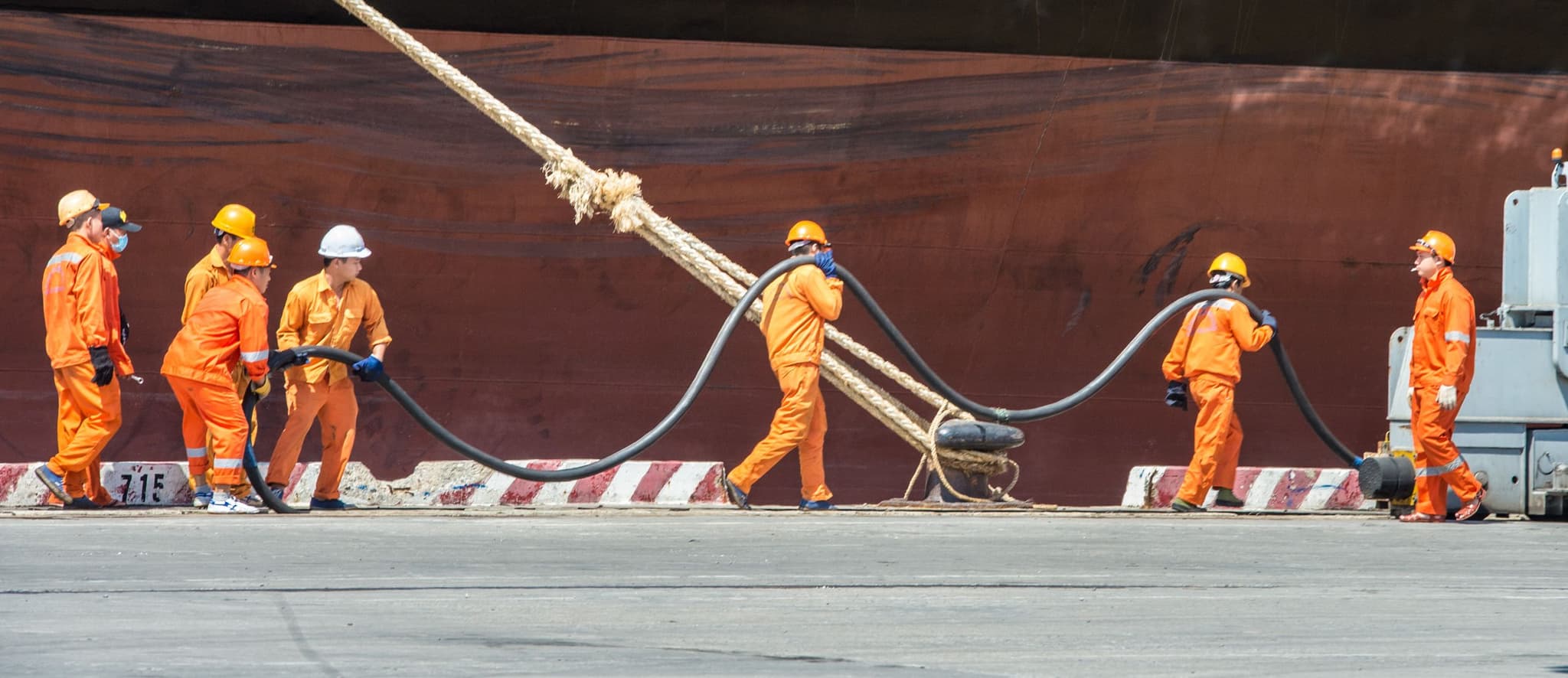
Workforce standards and engagement span all three dimensions. Governance encompasses WHS policies, labor and human rights commitments, and oversight of workforce programs. Planning and Development covers workforce facilities, training infrastructure, and safety in design. Operations includes day to day WHS, welfare, due diligence, training delivery, and health and wellbeing support.





Summary
Workforce standards and engagement is a core governance and operational aspect of green port management, encompassing the protection of worker health, safety, rights, and wellbeing across port operations, supply chains, and seafarer interactions (ILO, 2018; ISO, 2018). For ports across Asian Development Bank (ADB) Developing Member Countries (DMCs), workforce standards are particularly significant given the large port labor forces, the presence of migrant workers and seafarers from diverse origins and evolving national and international standards on labor rights and modern slavery (ILO, 2020).
Internationally, workforce standards in ports are shaped by International Labour Organization (ILO) conventions, including the Maritime Labour Convention 2006 (MLC 2006), which consolidates shipboard labor standards and includes Regulation 4.4 on shore based seafarer welfare facilities (ILO, 2006), the ILO Dock Work Convention C137 (1973) and Occupational Safety and Health (Dock Work) Convention C152 (1979), and the ILO Code of Practice on Safety and Health in Ports (revised 2016) (ILO, 2018). The ISO 45001:2018 Occupational Health and Safety Management Systems standard provides a globally recognized framework for managing workplace risks (ISO, 2018). The International Maritime Organization (IMO) International Convention on Standards of Training, Certification and Watchkeeping for Seafarers (STCW Convention) establishes mandatory training standards (IMO, 1978/2010).
Peer reviewed research has examined workforce issues in ports. Safety Science has published a systematic review of occupational risks and health and safety in ports (Gonçalves et al., 2025). Marine Policy has analyzed gender equality for sustainability in ports (Barreiro-Gen et al., 2021). Frontiers in Public Health has reviewed seafarer fatigue (Ma and Liao, 2025). The Maritime Just Transition Task Force, working with the Lloyd's Register Maritime Decarbonisation Hub and funded by the IMO and Lloyd's Register Foundation, has examined the training seafarers need for a decarbonized shipping industry (Maritime Just Transition Task Force, 2024).
In DMCs, the EU-funded ILO Ship to Shore Rights Project has addressed labor rights of migrant workers in the fishing and seafood processing sectors in Thailand, with lessons applicable to port labor contexts (ILO, 2020). The International Seafarers Welfare and Assistance Network (ISWAN) operates SeafarerHelp and related welfare services accessible to seafarers calling at DMC ports (ISWAN, n.d.). The Mission to Seafarers works in over 200 ports across 50 countries, including ports in several DMCs (Mission to Seafarers, n.d.).
Effective workforce standards and engagement in ports encompass several complementary practices: implementing work health and safety management systems, providing seafarer welfare facilities, conducting labor standards and modern slavery due diligence, delivering training and competency programs, and supporting worker health and wellbeing. These practices collectively can protect worker rights and safety, reduce workplace incidents, support seafarer welfare, build workforce capacity, and align port operations with international labor standards (IFC, 2012).
Modern slavery risks in maritime supply chains have received growing attention. The Walk Free Global Slavery Index provides country level assessments of modern slavery prevalence (Walk Free, 2023). Australia's Modern Slavery Act 2018, which was the subject of a statutory review reported in 2023, requires large businesses to report on modern slavery risks in their operations and supply chains, with port operators increasingly subject to reporting expectations (Australian Government, 2023).
Strong workforce standards and engagement protect workers, support equitable economic participation, and build the workforce capacity required for green port transitions.
This aspect contributes to United Nations Sustainable Development Goal (SDG) 3 (Good Health and Well-being), SDG 5 (Gender Equality), SDG 8 (Decent Work and Economic Growth), and SDG 10 (Reduced Inequalities) (United Nations, 2015).