Aspect
Materials Handling
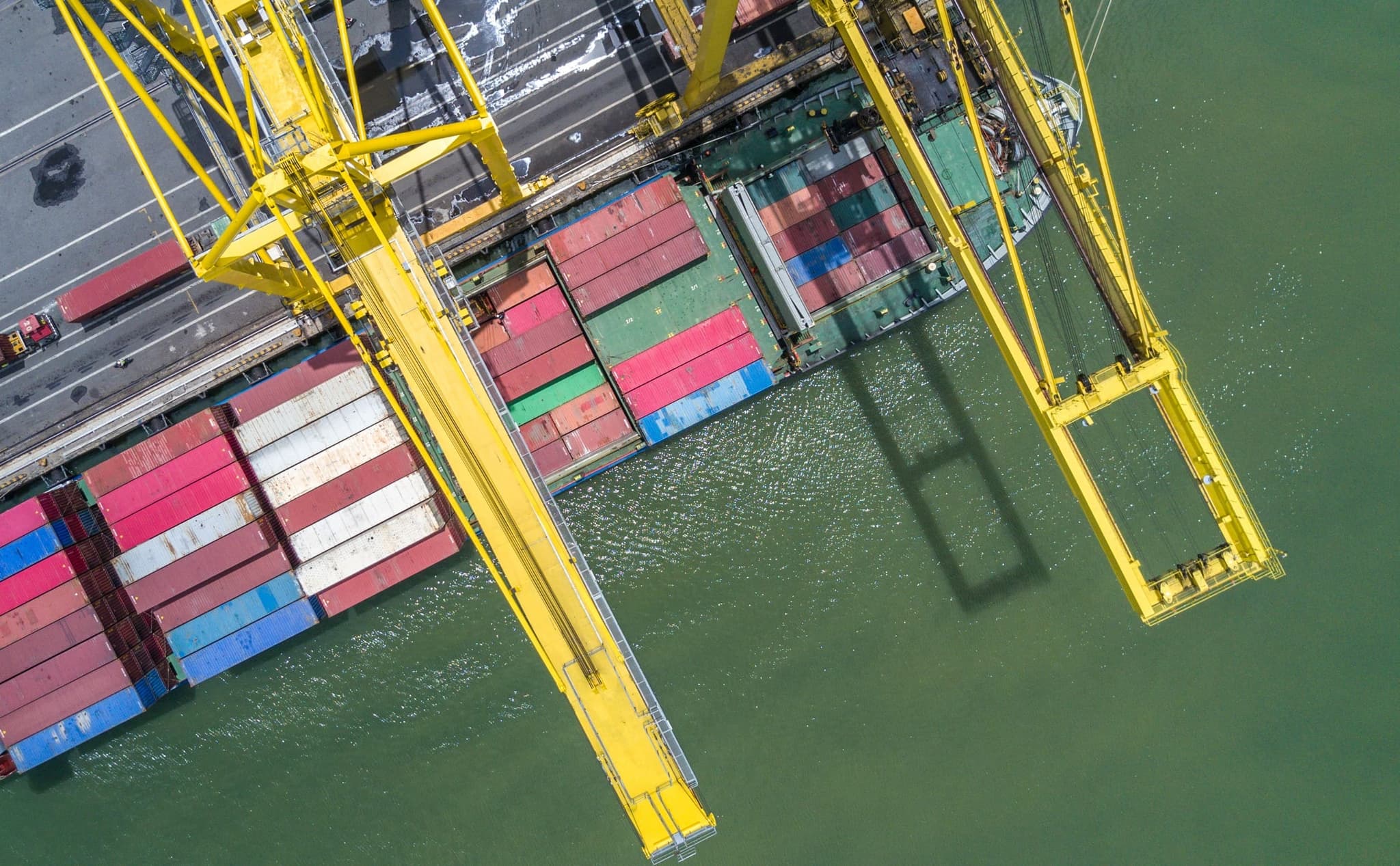
Materials handling spans all three dimensions. Governance encompasses environmental management policies, permits, and community commitments. Planning and Development covers design of enclosed handling systems, containment infrastructure, and stormwater management. Operations includes day to day handling, weather responsive controls, dust suppression, and emission control.















Summary
Materials handling is a critical operational aspect of green port management, encompassing the systematic control of bulk cargo movements to prevent environmental impacts from dust, spillage, stormwater contamination, and emissions.
For ports across Asian Development Bank (ADB) Developing Member Countries (DMCs), effective materials handling is particularly significant given the scale of bulk commodity trade, including, among others, coal, iron ore, grain, cement, fertiliser, and palm oil products, and the proximity of port operations to residential and ecologically sensitive areas.
Internationally, materials handling practices are shaped by industry guidance from the likes of:
- Port Equipment Manufacturers Association (PEMA) on Dry Bulk Cargoes and the Impact on Air Pollution in Ports (PEMA, 2022),
- United States Environmental Protection Agency (US EPA) Dust Control Best Management Practice guidance (US EPA, 2021), and baghouse filter monitoring techniques (US EPA, 2026).
- The International Safety Guide for Oil Tankers and Terminals (ISGOTT), jointly published by the Oil Companies International Marine Forum (OCIMF), the International Chamber of Shipping (ICS), and the International Association of Ports and Harbors (IAPH), provides safety and environmental standards for liquid bulk handling (OCIMF, ICS and IAPH, 2020).
- The Society of International Gas Tanker and Terminal Operators (SIGTTO) provides guidance on liquefied gas handling (SIGTTO, 2016).
For dry bulk terminals, fugitive dust emissions can present a significant environmental and public health concern. Peer reviewed research in the Journal of Marine Science and Engineering has linked the cargo types handled at a dry bulk port to local particulate matter (PM2.5 and PM10) concentrations and called for targeted dust management by cargo type (Hwang and Kim, 2020).
Effective materials handling encompasses several complementary practices:
- using enclosed conveyors and transfer points,
- conducting weather monitoring linked to operational controls,
- applying dust suppression at transfer and storage points,
- maintaining controlled storage and containment,
- capturing first flush stormwater, and
- operating baghouse filters and emission controls.
These practices collectively can reduce air emissions, protect water quality, prevent material loss, support worker and community health, and support compliance with environmental regulations.
Emerging technologies support materials handling improvements. Enclosed ship unloaders and conveyors, provided by manufacturers such as Bruks Siwertell and Vigan Engineering, are available for new bulk terminal developments (Bruks Siwertell, n.d.; Vigan Engineering, n.d.).
Weather monitoring systems from providers such as Vaisala support operational decision making (Vaisala, n.d.). Specialist dust suppression technologies, such as DustBoss, EcoFog, and DSH Systems hopper technology, offer tailored solutions for different cargo types and operational contexts (BossTek, n.d.; Barra Project, 2024; DSH Systems, n.d.).
This aspect contributes to United Nations Sustainable Development Goal (SDG) 3 (Good Health and Well-being), SDG 11 (Sustainable Cities and Communities), SDG 12 (Responsible Consumption and Production), SDG 14 (Life Below Water), and SDG 15 (Life on Land). Effective materials handling can reduce air and water pollution, protect community health, prevent ecosystem damage, and reduce cargo loss.