Aspect
Maintenance
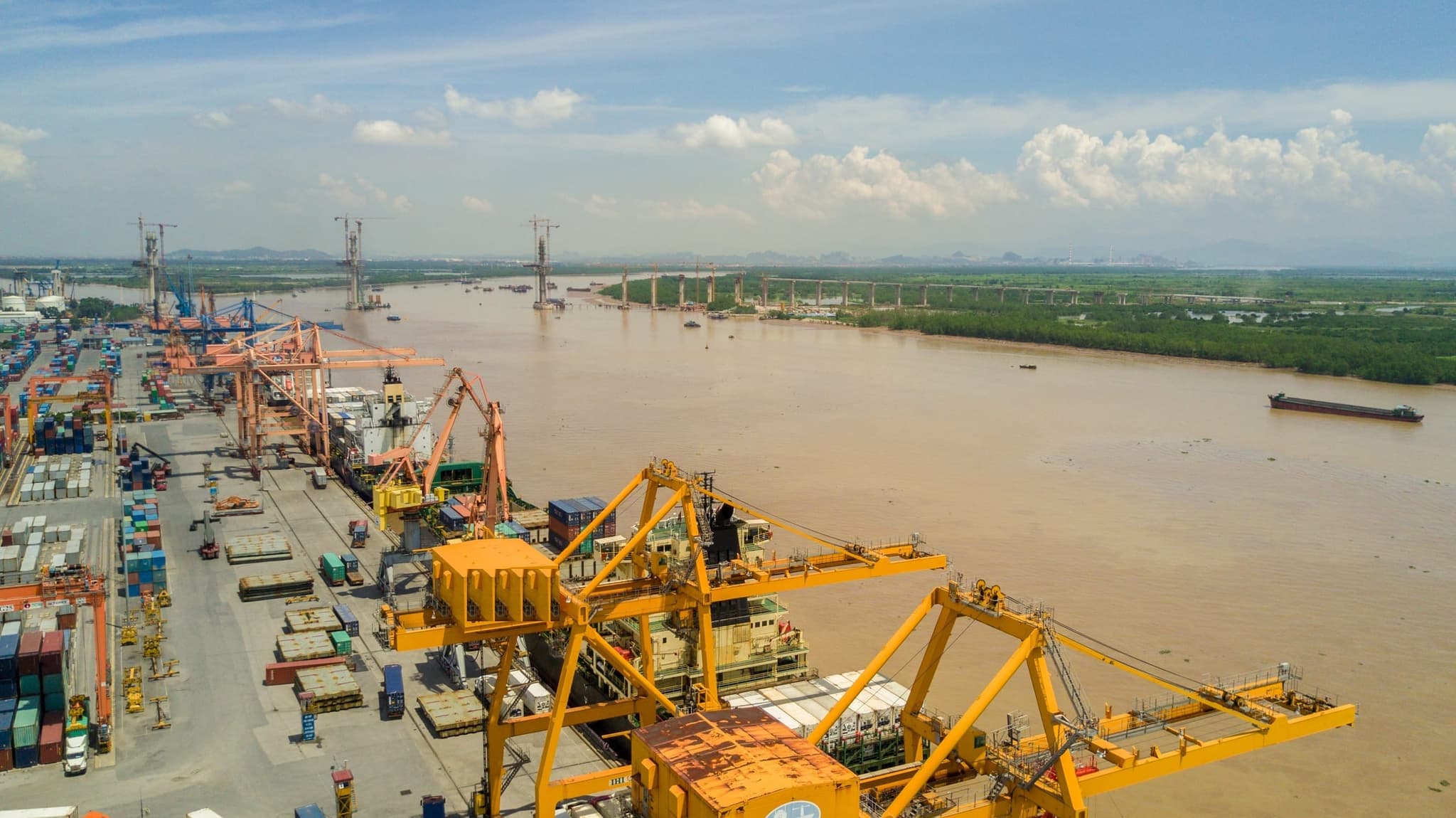
Maintenance spans all three dimensions. Governance encompasses maintenance policies, asset management frameworks (ISO 55001), and oversight of circular economy commitments. Planning and Development covers design for maintainability, critical asset identification, and specification of maintenance friendly infrastructure. Operations includes day to day preventive, predictive, risk based, biofouling, dredging, and circular maintenance activities.

Summary
Maintenance is a critical operational aspect of green port management, encompassing the systematic preservation, servicing, and life extension of port infrastructure, equipment, and submerged structures.
For ports across Developing Member Countries (DMCs), effective maintenance is particularly significant given the demanding operating environments found across DMCs, from tropical humidity and cyclone exposure to arid and temperature extreme conditions, and the intensive use of port assets (ADB, 2020).
Internationally, asset management in ports is guided by ISO 55001:2024 Asset management - Asset management system - Requirements (ISO, 2024), which provides a structured framework for managing physical assets across their lifecycle.
The International Finance Corporation (IFC) Environment, Health, and Safety Guidelines (EHS) for Ports, Harbors, and Terminals (IFC, 2017) establishes environmental and social risk management standards for port operations, including maintenance activities.
The World Association for Waterborne Transport Infrastructure (PIANC) has published guidance on Life Cycle Management of Port Structures (PIANC, 2008), A Guide for a Risk-based Approach to Environmental Windows for Dredging and Navigation Infrastructure Works (PIANC, 2026), and Dredging Management Practices for the Environment (PIANC, 2009), providing sector specific frameworks for sustainable maintenance.
In DMCs, port maintenance faces particular challenges. Tropical climates accelerate corrosion of steel structures, fouling of submerged surfaces, and degradation of concrete infrastructure, while arid and temperature extreme environments bring their own stresses, including thermal cycling, dust ingress, and salt weathering. Rapidly increasing vessel sizes require ongoing maintenance dredging to maintain navigational depths. Climate change is expected to increase natural hazard risk to port infrastructure, including from rising sea levels and tropical cyclones (Verschuur et al., 2023). At the same time, maintenance activities can create environmental impacts, including sediment disturbance, noise, waste generation, and emissions, that require careful management.
Effective port maintenance encompasses several complementary practices:
- implementing preventive and predictive maintenance,
- applying risk-based maintenance,
- managing biofouling on submerged structures,
- conducting maintenance dredging with minimized environmental impacts, and
- adopting circular maintenance practices.
These practices collectively can extend asset life, reduce environmental incidents, maintain operational reliability, reduce lifecycle costs, and support circular economy principles.
Emerging technologies are transforming port maintenance. Machine learning based predictive maintenance at smart ports has been documented in peer reviewed research, demonstrating the application of sensor data and analytics to anticipate equipment failures (Aslam et al., 2025).
The Port of Rotterdam is developing a digital twin of the port, including all infrastructure, ship movements, weather and hydro information, and a planning tool that coordinates quay wall inspections, dredging and depth surveys with terminal operations (Port of Rotterdam Authority, 2022). Automated condition monitoring through vibration sensors, temperature sensors, and oil analysis is increasingly standard on modern cargo handling equipment.
In the ASEAN region, PSA Singapore has developed a digital system to plan and track maintenance of infrastructure assets and the life of critical quay crane components at Tuas Port (PSA International, 2023b). The Port of Rotterdam circular port program, which focuses on reusing and recycling materials and waste streams, provides a reference for circular approaches in port environments (Port of Rotterdam Authority, 2021).
This aspect contributes to United Nations Sustainable Development Goal (SDG) 9 (Industry, Innovation and Infrastructure), SDG 12 (Responsible Consumption and Production), SDG 14 (Life Below Water), and SDG 15 (Life on Land). Systematic maintenance can prevent environmental incidents, extend infrastructure lifespans, reduce material consumption, and support ecosystem protection.