Aspect
Decommissioning and End-of-Life
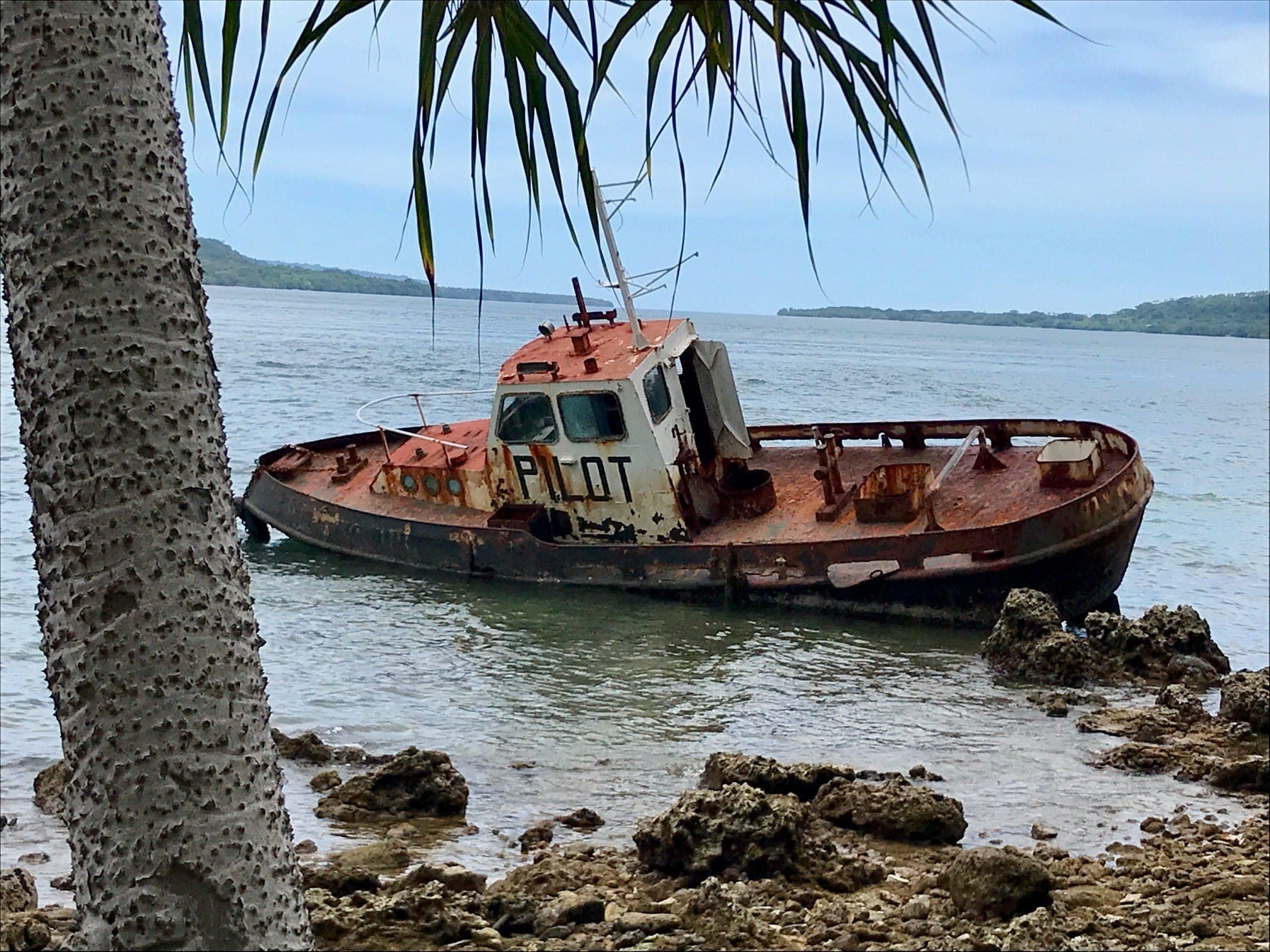
Decommissioning and end of life management span all three dimensions. Governance encompasses financial provisioning, end of life policies, and oversight of hazardous materials and rehabilitation. Planning and Development covers design for deconstruction, asset registers, and integration of end of life considerations during initial development. Operations includes day to day asset register maintenance, material tracking, and progressive decommissioning activities.






Summary
Decommissioning and end of life management is a strategic aspect of green port management, encompassing the planning, execution, and remediation activities associated with retiring port infrastructure and assets at the end of their operational life.
For ports across Asian Development Bank (ADB) Developing Member Countries (DMCs), decommissioning is an emerging but increasingly important consideration as older port infrastructure reaches end of life and as port redevelopment and consolidation create brownfield rehabilitation opportunities.
Internationally, decommissioning and end of life management in ports are shaped by standards and frameworks including the International Maritime Organization (IMO) Hong Kong International Convention for the Safe and Environmentally Sound Recycling of Ships, which entered into force in June 2025 (IMO, 2009/2025), the European Union Ship Recycling Regulation (EU 1257/2013) (European Parliament and Council of the European Union, 2013), and the IMO Guidelines for Ship Recycling (IMO, 2012).
The PIANC Life Cycle Management of Port Structures report (PIANC, 2008) and PIANC Report 150 Sustainable Ports Guide (PIANC, 2014) provide port specific guidance on end of life considerations. ISO 14040 and ISO 14044 establish international standards for lifecycle assessment (ISO, 2006).
Contaminated land assessment is shaped by frameworks such as the ASTM E1527-21 Phase I Environmental Site Assessment standard (ASTM International, 2021) and the Australian National Environment Protection (Assessment of Site Contamination) Measure 1999, as amended in 2013 (NEPC, 2013). Peer reviewed research in Nature Reviews Earth and Environment has reviewed contaminated land remediation approaches (Hou et al., 2023). The Basel Convention on the Control of Transboundary Movements of Hazardous Wastes provides a global framework for hazardous waste movements (Secretariat of the Basel Convention, 1989/2025).
Circular economy approaches are transforming port end of life management. Port of Antwerp-Bruges and Port of Rotterdam run circular economy programs that host recycling and circular industry in their port areas, although these do not specifically address decommissioning of port assets (Port of Antwerp-Bruges, n.d.; Port of Rotterdam, 2021).
Brownfield port redevelopment provides notable examples of integrated end of life management. HafenCity Hamburg, described by its developer as Europe's largest inner-city urban development area, transforms former port lands into a mixed-use district (HafenCity Hamburg GmbH, n.d.). Barangaroo Reserve in Sydney, Australia, converts a former port and container terminal site into an urban park with waterfront public access (Landscape Architecture Foundation, 2017). Wynyard Quarter in Auckland, New Zealand, transforms port brownfield land into a mixed-use precinct with remediation and heritage retention (Auckland Council, n.d.). In France, Dunkerque-Port drew up a Natural Heritage Master Plan in 2010 to conserve or create natural habitats within its port area (Dunkerque-Port, n.d.).
Effective port decommissioning and end of life management encompasses several complementary practices:
- end of life planning for infrastructure,
- contaminated land assessment and remediation,
- material recovery and recycling,
- safe removal of hazardous materials, and
- site rehabilitation and ecosystem restoration.
These practices collectively can reduce environmental damage during closure, avoid unmanaged legacy contamination, support circular economy principles, protect worker and community health, and enable beneficial reuse of former port lands.
Systematic decommissioning supports brownfield regeneration, circular material flows, protection of marine and terrestrial ecosystems, and avoidance of long-term contamination liabilities.
This aspect contributes to United Nations Sustainable Development Goal (SDG) 11 (Sustainable Cities and Communities), SDG 12 (Responsible Consumption and Production), SDG 14 (Life Below Water), and SDG 15 (Life on Land) (United Nations, 2015).